Helping Your Little One Find Their Voice: A Guide to Vocabulary Building
Watching your child transition from babbling to their first "Mama" or "Dada" is a milestone every parent treasures. But once those first few words emerge, you might find yourself wondering: What comes next? How can I help them say more? In the world of early childhood development, vocabulary building for kids is not just about memorizing a list of words; it's about giving your child the tools to express their needs, share their feelings, and eventually, tell their own stories.
As we navigate March 2026, the resources available to parents have never been more sophisticated. While traditional methods like reading and singing remain vital, we now have evidence-based digital tools designed to support language acquisition. In this guide, we'll explore how you can foster a language-rich environment at home for children aged 1 through 5, ensuring they have a solid foundation for school and beyond.
Why Vocabulary Building for Kids Matters
Research consistently shows that a child's early vocabulary is a strong predictor of their later academic success. But beyond grades, vocabulary is the key to social-emotional health. When a toddler can say "I'm frustrated" instead of throwing a tantrum, or a local preschooler can ask a friend, "Can I play with you?" they are using their words to navigate the world with confidence.
If you are concerned about your child's progress, it is always a good idea to consult a speech-language pathologist for professional advice. In the meantime, there are countless ways you can support them through daily interaction.
Vocabulary Milestones: What to Expect from Ages 1 to 5
While every child develops at their own pace, having a general roadmap can help you tailor your vocabulary building strategies to their specific stage.
- Age 1 to 2: This is the "word explosion" phase. Children typically start with 1-20 words and may reach up to 200 words by their second birthday. They begin to understand simple commands and point to pictures in books.
- Age 2 to 3: Vocabulary grows to 200—500 words. You'll start to hear two-word phrases like "More juice" or "Doggy run."
- Age 3 to 4: Sentences become longer (4-5 words), and their vocabulary expands to nearly 1,000 words. They begin to use basic grammar and tell simple stories about their day.
- Age 4 to 5: By this age, children are often using 1,500 to 2,500 words. They can follow complex instructions and engage in detailed conversations.
Evidence-Based Strategies for Boosting Vocabulary
You don't need fancy flashcards to be an effective teacher. In fact, some of the best vocabulary building for kids happens during bath time, grocery shopping, or car rides. Here are some proven techniques:
1. Self-Talk and Parallel Talk
Self-talk is simply narrating what you are doing. "I am washing the big red apple. Now I am cutting it into slices." Parallel talk is narrating what your child is doing. "You are building a tall tower with the blue blocks! Oh, look, the tower fell down!" This constant stream of language helps children connect actions with specific words in real-time.
2. The "Plus-One" Expansion Rule
If your child says a single word, respond by adding one more word to it. If they point to a dog and say "Dog," you say "Big dog" or "Brown dog." This validates their communication while gently introducing them to the next level of sentence structure.
3. Focused Stimulation
Choose a "word of the week" or a specific category. For example, if you are focusing on "transportation," point out cars, buses, trucks, and airplanes throughout the week. Repetition is the secret sauce of language learning.
Integrating Technology: Tiny Talkers as a Learning Partner
We know that parents are often wary of screen time, and for good reason. However, high-quality, interactive apps can be a powerful supplement to face-to-face interaction. Tiny Talkers is designed specifically as a speech therapy game app that encourages active participation rather than passive watching.
With features like a Pronunciation Coach and 100+ word categories, it provides a structured way to practice vocabulary building for kids. Whether your child is learning about farm animals, household objects, or complex emotions, the app uses engaging articulation activities to keep them motivated. You can download Tiny Talkers on the iOS App Store or on Google Play.
The app even features Custom Stories, allowing you to integrate your child's own name and interests into the learning process, which is a fantastic way to increase engagement and retention.
Play-Based Games for Vocabulary Growth
Play is a child's "work." When they are having fun, their brains are more receptive to new information. Try these simple games at home:
- The "I Spy" Variation: Instead of colors, use descriptive words. "I spy something fuzzy," or "I spy something that we use to eat soup."
- Mystery Bag: Put several household objects in an opaque bag. Have your child reach in, feel one, and try to describe it before pulling it out. Is it hard? Smooth? Cold?
- Action Simon Says: Instead of just "Jump," use more descriptive verbs. "Simon says... stomp like an elephant" or "Simon says... tiptoe like a mouse."
For more ideas on interactive play, check out our post on the best speech games for toddlers.
Reading: The Gold Standard for Language
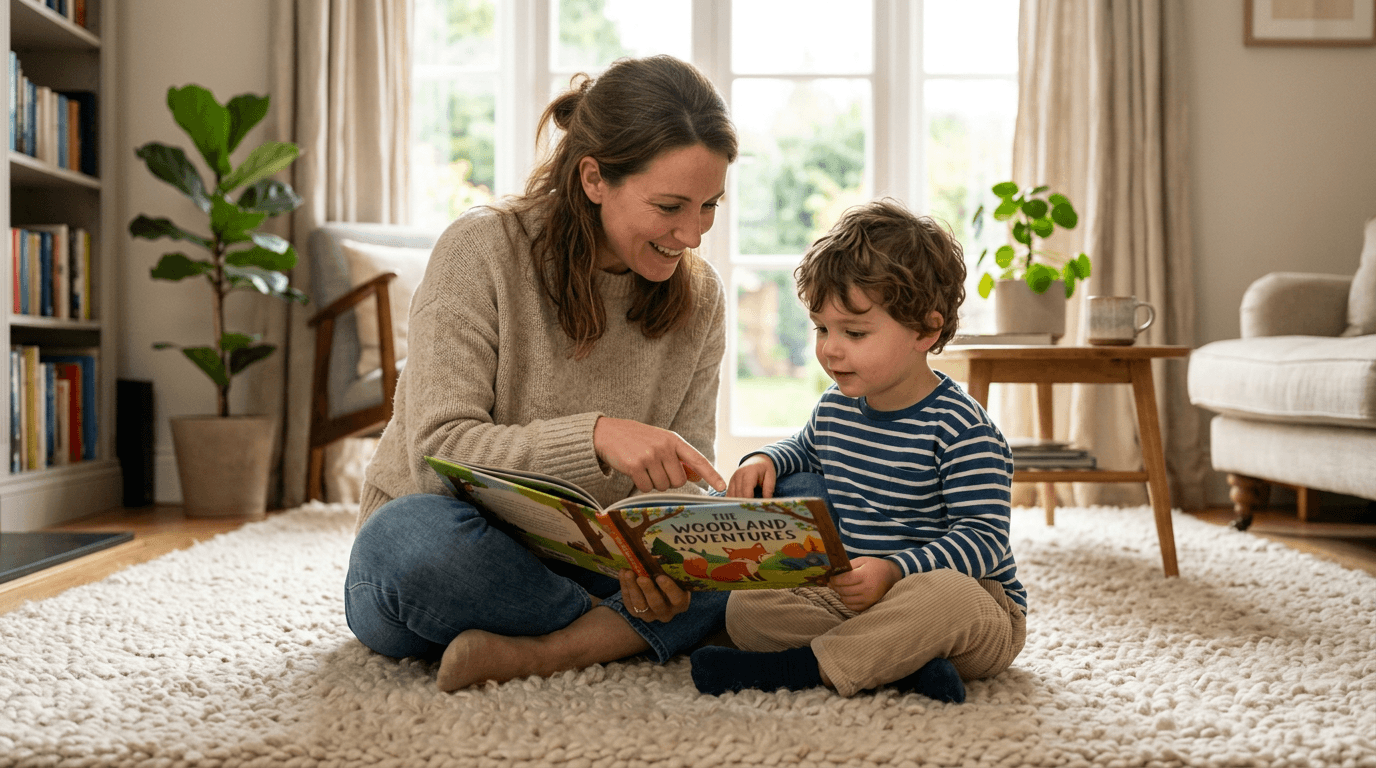
No list of vocabulary building for kids would be complete without mentioning books. Reading aloud exposes children to "rare" words they might not hear in everyday conversation. When reading, don't just read the text on the page. Stop and ask questions. "Why do you think the bear is sad?" or "What color is the bird's hat?"
By age 4 and 5, you can start using books to explain the meanings of new words using words they already know. This is called "definitional vocabulary" and is a critical skill for school readiness.
When to Seek Professional Support
As a supportive parent, you want the best for your child. It's important to remember that while these activities are helpful, they are not a replacement for professional therapy if a delay is present. If your child is not meeting major milestones, or if you feel they are struggling more than their peers, please consult a speech-language pathologist for professional advice.
Early intervention is incredibly effective. Many parents find that a combination of professional guidance and daily practice with tools like the Tiny Talkers app leads to significant breakthroughs in their child's communication skills.
Conclusion: Every Word Counts
Building a child's vocabulary is a marathon, not a sprint. Every book you read, every song you sing, and every minute you spend playing with the Tiny Talkers app contributes to their growing world. By focusing on vocabulary building for kids through warm, supportive interactions, you are giving your child the ultimate gift: the ability to be heard and understood.
Keep talking, keep playing, and keep celebrating every new word—no matter how small!