Navigating the Early Years of Communication
As a parent, you hang on every sound, every giggle, and every attempt at a first word. But what happens when those milestones seem a little further away than expected? If you've found yourself searching for speech therapy for toddlers, please know that you are not alone, and your proactive approach is the greatest gift you can give your child. In March 2026, we have more resources than ever to help our little ones find their voices.
Understanding speech therapy for toddlers isn't just about fixing a "problem"; it's about unlocking a child's ability to express their needs, their feelings, and their unique personality. Early intervention is a powerful tool that uses play and connection to bridge the gap between frustration and communication. Whether your child is a "late talker" or is struggling with specific sounds, the right support can make a world of difference.
When to Consider Speech Therapy for Toddlers
It is common for parents to wonder if their child is simply a "late bloomer" or if there is a genuine need for professional support. While every child develops at their own pace, there are certain milestones that speech-language pathologists (SLPs) look for. If you notice your toddler is not meeting these general markers, it may be time to look into speech therapy for toddlers.
- By 12 Months: Not using gestures, like pointing or waving bye-bye.
- By 18 Months: Prefers gestures over vocalizations to communicate or has trouble imitating sounds.
- By 24 Months: Only imitates speech or actions and doesn't produce words or phrases spontaneously; uses only a few sounds or words repeatedly.
- By 30 Months: Not using two-word combinations (e.g., "more juice" or "mommy go").
Disclaimer: Please consult a speech-language pathologist for professional advice and a formal evaluation if you have concerns about your child's development.
What Does a Speech Therapy Session Look Like?
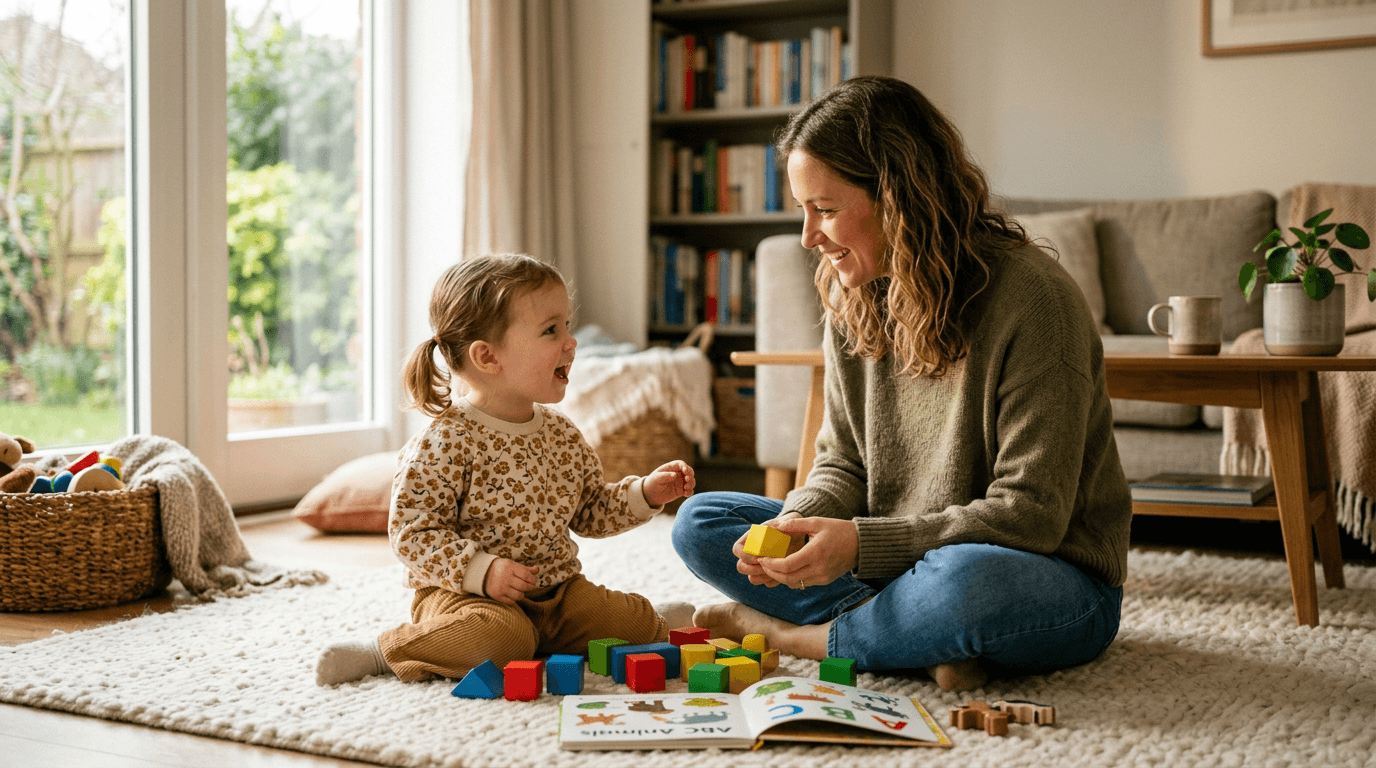
Many parents imagine a clinical setting with flashcards and drills, but speech therapy for toddlers is quite the opposite. At this age, therapy is almost entirely play-based. A skilled therapist will get down on the floor, using bubbles, blocks, and dolls to create "communication temptations."
During a session, the therapist might work on: receptive language (understanding what is said), expressive language (using words and gestures), or articulation (the physical production of sounds). For toddlers, the goal is often to make communication so fun that they can't help but try! To supplement these professional sessions, many parents are turning to engaging digital tools. For example, the Tiny Talkers app on iOS provides articulation activities that feel like a game, making practice at home something children actually look forward to.
Effective Home Strategies for Speech Development
While professional sessions are vital, the most significant progress often happens during the 160+ hours a week your child spends with you. Integrating speech therapy for toddlers into your daily routine doesn't have to feel like "work." Here are a few evidence-based strategies to try at home:
1. Narrate Your Day
Act like a sports commentator for your life. "Mommy is pouring the blue milk. Mmm, cold milk! Now we are putting the cup on the table." This constant stream of simple, clear language helps your toddler map words to actions and objects.
2. The "Power of the Pause"
We often anticipate our children's needs before they have to speak. If your child wants a cracker, hold it near your mouth, make eye contact, and wait. Give them 5—10 seconds to make a sound or attempt a word before giving it to them. This creates a space for them to realize that their voice has power.
3. Interactive Play with Technology
In 2026, technology is a partner in development when used correctly. Using a specialized speech therapy game can provide the repetitive practice children need for sound mastery. The Tiny Talkers app for Android features a Pronunciation Coach and over 100 word categories, ensuring that screen time is actually "speech time." You can read more about balancing technology in our post on screen time and speech development.
The Importance of Articulation and Pronunciation
Sometimes, a toddler has plenty to say, but nobody can understand them. This is where speech therapy for toddlers focuses on articulation. It's normal for a two-year-old to be only about 50% intelligible to strangers, but if they are struggling to produce basic vowel sounds or early consonants (like p, b, m, h, and w), a therapist can help.
Games that encourage mouth movement—like blowing bubbles, making silly faces in the mirror, or using the alphabet games in the Tiny Talkers app—can strengthen the muscles needed for clear speech. The app's Custom Stories feature even allows you to put your child's name and familiar objects into the narrative, making the practice deeply personal and relevant to their life.
Choosing the Right Path for Your Child
When seeking speech therapy for toddlers, you may have options between private clinics, hospital-based programs, or state-funded early intervention services. The "best" option is the one that fits your family's schedule and makes your child feel comfortable. Consistency is more important than the specific location. For more tips on finding the right provider, check out our guide on how to choose a speech pathologist.
Remember, the goal of speech therapy for toddlers is to build confidence. When a child finally says a word they've been struggling with, their whole face lights up. That confidence spills over into their social interactions, their behavior, and eventually, their academic success.
Conclusion: You Are Your Child's Best Advocate
If you are worried about your child's speech, trust your instincts. Seeking an evaluation for speech therapy for toddlers is a positive step that provides you with a roadmap for the future. Whether you are using traditional therapy, engaging with the Tiny Talkers app at home, or a combination of both, you are doing exactly what your child needs.
Stay patient, stay supportive, and celebrate every small win. A single new sound or a new gesture is a milestone worth celebrating. With the right tools and a whole lot of love, your tiny talker will find their way.