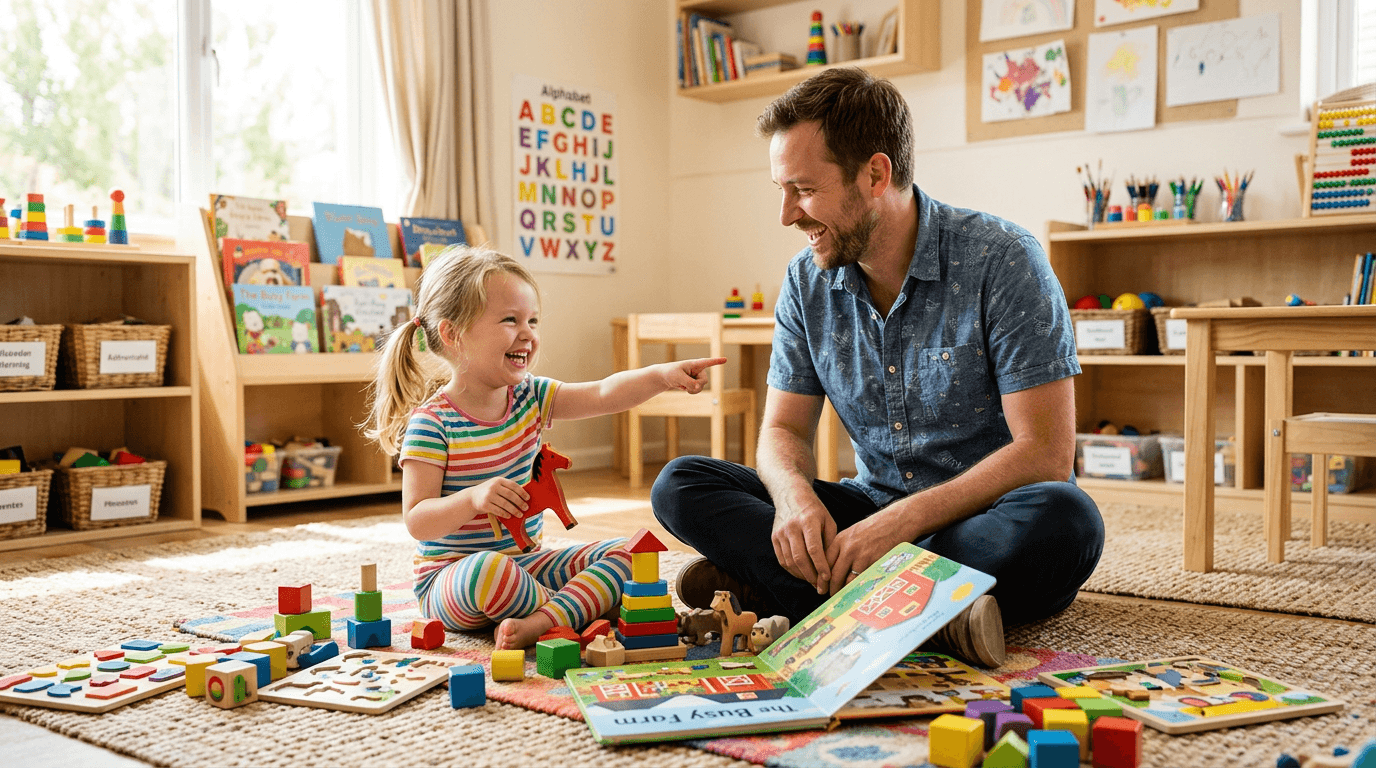
Empowering Your Child Through Play
As a parent in 2026, you likely find yourself navigating a world full of educational options, from traditional toys to high-tech tools. It is completely natural to feel a bit overwhelmed or even anxious about whether your child is hitting their developmental milestones. If you have been searching for preschool learning activities that feel like play rather than work, you are in the right place. At Tiny Talkers, we believe that the heart of learning lies in the connection between you and your child.
Preschool is a magical window of time where the brain is incredibly plastic. It is the period when vocabulary explodes, social skills begin to blossom, and the foundations for reading are laid. However, it is important to remember that every child progresses at their own pace. While these activities are designed to stimulate growth, please consult a speech-language pathologist for professional advice if you have specific concerns about your child's progress.
The Connection Between Play and Communication
Why do we focus so much on play? Because for a preschooler, play is their job. When a child engages in hands-on preschool learning activities, they are not just having fun; they are building neural pathways. They are learning how to categorize objects, how to sequence events, and how to use their voices to express needs and ideas. By integrating speech and language goals into these play moments, we can help them develop "pre-reading" skills—such as recognizing sounds and patterns—without any of the pressure of a classroom setting.
1. The Classic "I Spy" With a Twist
This is one of the most versatile preschool learning activities. Instead of just spying colors, try spying sounds or functions. "I spy with my little eye, something that we use to drink milk," or "I spy something that starts with the 'B' sound." This helps with both vocabulary and phonological awareness.
2. Sensory Bin Scavenger Hunt
Fill a plastic bin with rice, beans, or kinetic sand. Hide small toy animals or objects inside. As your child finds an item, encourage them to describe it. "You found the cow! What does the cow say?" Sensory play keeps the body engaged, which often helps the mind focus on language production. For more ideas, check out our post on sensory play for speech therapy.
3. Interactive Storytelling and Narrative Skills
Don't just read the book; live the book. Ask "What do you think happens next?" or "Why do you think the bear is sad?" Building narrative skills is a key component of preschool learning activities that lead directly to better reading comprehension later in life.
4. Simon Says (Listening and Directions)
Listening is the flip side of speaking. Playing "Simon Says" helps preschoolers practice auditory processing and following multi-step directions. Start simple ("Simon says touch your nose") and move to more complex tasks ("Simon says touch your toes then clap your hands").
5. Tiny Talkers: The Digital Partner in Learning
In today's world, screen time can be a positive part of your toolkit when used intentionally. The Tiny Talkers app is a speech therapy game app designed specifically for kids and toddlers. It offers a Pronunciation Coach and over 100+ word categories to help your child master new sounds.
You can download the app to supplement your at-home activities:
Download on iOS | Download on Android
With features like Custom Stories and articulation activities, it turns screen time into an evidence-based learning session. It's a great way to reinforce the concepts you're working on during physical play.
6. Kitchen Helpers: Following Recipes
Cooking is one of the best preschool learning activities for sequencing. Use words like "First," "Next," and "Finally." "First, we pour the flour. Next, we crack the egg." This builds a logic for how stories and instructions are structured.
7. Puppet Shows for Social Communication
Puppets allow children to practice "social scripts" in a safe environment. They can practice saying "Hello," "How are you?" or "Can I play with you?" through a character, which is often less intimidating for a shy child.
8. Sort and Label (Categorization)
Empty a basket of mixed toys and ask your child to sort them by category: animals, cars, or blocks. Categorization is a foundational cognitive skill that helps children organize their mental "dictionary."
9. Nature Scavenger Hunt
Take your preschool learning activities outdoors! Give your child a list (with pictures) of things to find: a yellow leaf, a smooth rock, a chirping bird. Discuss the adjectives you find along the way. If you want more outdoor inspiration, see our guide on outdoor language games.
10. Rhyme Time Match-Up
Phonological awareness is the ability to hear sounds in words. Say a word like "Cat" and ask your child to find a word that sounds the same. Rhyming is a precursor to decoding words in kindergarten.
11. Mystery Bag (Descriptive Language)
Put a common object in a cloth bag. Have your child feel it without looking and describe it. "Is it soft? Is it hard? Is it round?" This forces them to use descriptive adjectives beyond just visual cues.
12. The "What's Missing?" Memory Game
Place five objects on a table. Have your child close their eyes while you remove one. This encourages them to use their memory and verbalize the name of the missing item, reinforcing vocabulary retrieval.
13. Alphabet Yoga
Combine physical movement with letter recognition. Make your body into the shape of a 'T' or a 'C'. Moving the body helps solidify the shape of the letter in the child's memory.
14. Block Building Narratives
While building a tower, narrate what is happening. "Oh no, the blue block is on top of the red one! It's getting so high! It's wobbling!" This model-based language helps children pick up prepositions and descriptive verbs.
15. Emotion Mirroring
Sit in front of a mirror and make faces representing different emotions (happy, sad, surprised, angry). Label the emotion and talk about a time you felt that way. This builds emotional vocabulary and empathy.
16. Laundry Sorting (Real World Logic)
Sorting socks by color or matching pairs is a great way to practice the concepts of "same" and "different." These preschool learning activities integrated into daily chores make learning feel like a natural part of life.
17. Blowing Bubbles (Oral Motor Skills)
Blowing bubbles is more than just fun; it helps develop the muscles in the mouth and lips, which are essential for clear articulation. Try to blow big bubbles, small bubbles, and many bubbles at once!
18. Musical Statues (Inhibition Control)
Dance to music and stop immediately when the music stops. This helps with "inhibitory control," a part of executive function that helps children stop and listen before they react or speak.
How to Stay Encouraged
As you try these preschool learning activities, remember that the goal is not perfection. The goal is engagement. Some days, your child might not want to play "I Spy," and that is okay. Follow their lead. If they are interested in bugs, do a bug-themed scavenger hunt. If they love the Tiny Talkers app, let them spend ten minutes with the Alphabet Games while you prep dinner.
We know how much you care about your child's future. By spending even 15 minutes a day focused on these language-rich activities, you are giving them the tools they need to succeed in school and beyond. You are doing a great job, and we are here to support you every step of the way.
A Final Note on Digital Tools
In our modern era, we have amazing tools at our fingertips. The Tiny Talkers app is available on both platforms to help you bridge the gap between play and therapy:
- iOS: Get it on the App Store
- Android: Get it on Google Play
Whether you are using our Custom Stories feature to create a narrative about your child's day or using the Pronunciation Coach to work on those tricky 'S' sounds, we are honored to be a part of your parenting journey.