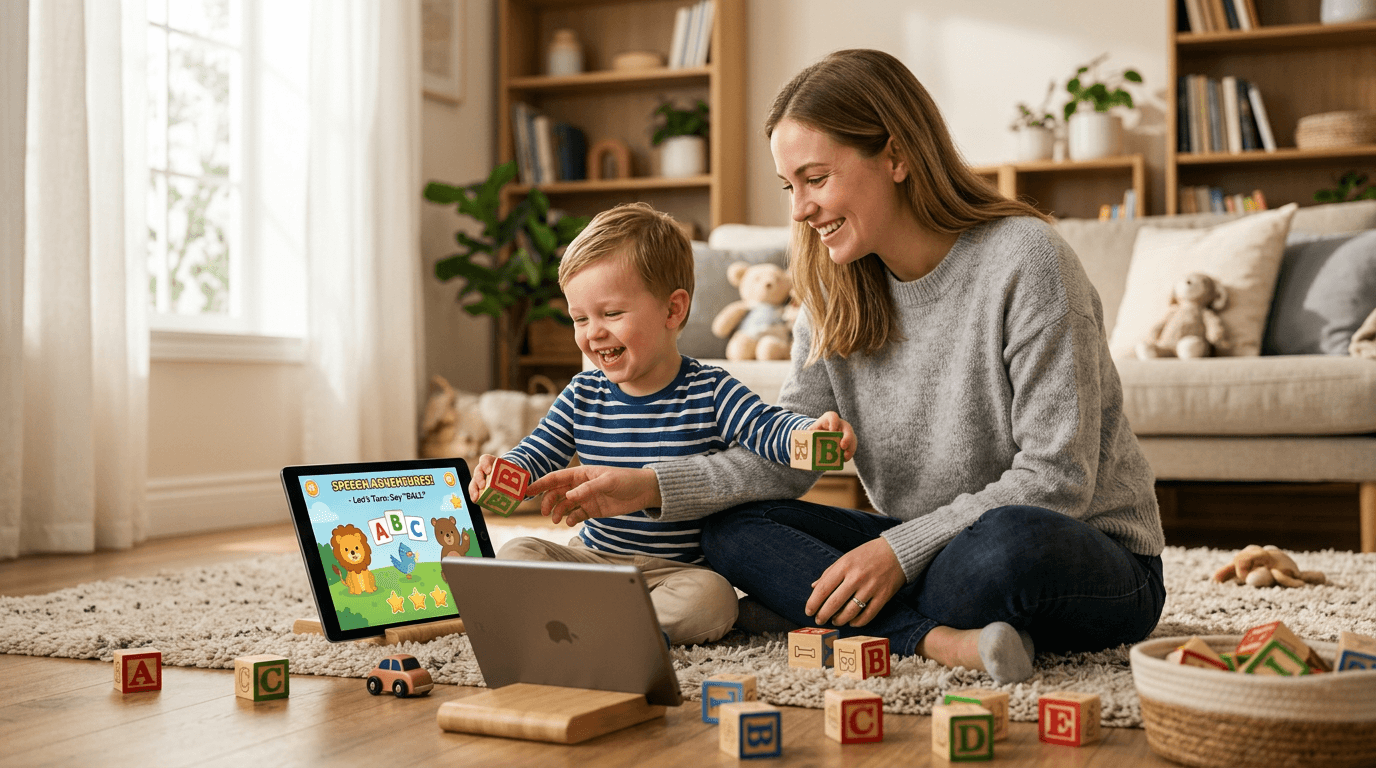
The Magic of Play: Why Toddler Games for Learning Matter
As parents, we often find ourselves watching our children play and wondering if they are reaching those crucial developmental milestones. In the world of early childhood, play is not just a way to pass the time—it is the work of the child. When we talk about toddler games for learning, we are referring to the essential building blocks of communication, social interaction, and cognitive growth. By March 2026, the landscape of early education has shifted toward even more personalized, play-based intervention, and for good reason.
If you are concerned about your child's speech progress, you are not alone. Many parents feel a sense of anxiety when their little ones are not yet using as many words as their peers. However, the best way to encourage language is through joy and connection. By integrating toddler games for learning into your daily routine, you create a low-pressure environment where your child feels safe to experiment with sounds and words. Please note: while these activities are beneficial, you should always consult a speech-language pathologist for professional advice if you have specific concerns about your child's development.
The Connection Between Movement and Language
Did you know that physical movement is deeply linked to language acquisition? When toddlers engage their large muscle groups, it stimulates the brain areas responsible for processing information. Some of the best toddler games for learning involve getting up and moving. Games like "Simon Says" or "Follow the Leader" teach children to follow multi-step directions and help them understand verbs like "jump," "run," and "stop."
As you play these games, try to narrate everything. If you are playing with a ball, say, "The ball goes up! Now the ball goes down." This constant stream of simple, clear language helps toddlers map words to actions. For more ideas on movement-based learning, check out our guide on Active Play and Speech Development.
Digital Learning: Finding the Right Balance
In 2026, screen time is a reality for most families. The key is not to avoid it entirely, but to choose high-quality, evidence-based tools that transform passive watching into active learning. This is where Tiny Talkers comes in. Designed by experts, Tiny Talkers is a speech therapy game app that bridges the gap between digital play and real-world therapy.
The app features a unique Pronunciation Coach and over 100 word categories, making it one of the most comprehensive toddler games for learning available today. Unlike mindless cartoons, Tiny Talkers encourages children to interact, repeat sounds, and engage in articulation activities. You can find it on the iOS App Store and Google Play Store. By using Tiny Talkers for just 15 minutes a day, you can provide your child with structured speech practice that feels like pure fun.
5 Sensory Toddler Games for Learning
- The Mystery Bag: Place common household objects (a spoon, a brush, a toy car) in an opaque bag. Have your child reach in, feel an object, and try to name it before pulling it out. This encourages descriptive language like "hard," "soft," or "bumpy."
- Shaving Cream Writing: Spread shaving cream on a tray and draw shapes or letters. As you draw, make the corresponding sounds. This tactile experience helps cement the connection between symbols and sounds.
- Water Play "Sink or Float": Use a basin of water and various toys. Ask your child, "Will it sink or float?" This introduces basic scientific concepts and builds vocabulary related to weight and movement.
- Edible Play-dough: Making dough together involves following a recipe and using action words like "stir," "pour," and "squeeze."
- Sound Matching: Fill plastic eggs with different items (beans, coins, cotton balls). Shake them and ask your child to find the matching sounds, enhancing auditory discrimination.
Using Custom Stories to Boost Engagement
One of the most effective toddler games for learning is personalized storytelling. Children are far more likely to engage with a story if they are the main character. Many modern parents are utilizing the "Custom Stories" feature in the Tiny Talkers app, which allows you to create narratives tailored to your child's specific interests and speech goals. Whether your child loves dinosaurs or space travel, you can build a story that targets the specific phonemes they are working on.
Reading together is a foundational activity, but "interactive" reading takes it a step further. Ask "Wh-" questions (Who, What, Where, Why) as you look at the pictures. Even if your toddler can only point, you are building their receptive language skills—the ability to understand what is being said. For more tips, visit our article on Interactive Reading Strategies.
The Importance of "Wait Time" in Learning Games
When playing toddler games for learning, one of the biggest mistakes we make as parents is jumping in too quickly to fill the silence. Speech-language pathologists often recommend the "Five Second Rule." When you ask a question or expect a response during a game, count to five slowly in your head before speaking again. This gives your child's brain time to process the information and formulate a response.
For example, if you are playing with the Tiny Talkers alphabet games and the app asks the child to name a letter, resist the urge to say it for them immediately. That silence is where the learning happens. By giving them space, you are building their confidence and showing them that you value their effort, no matter how long it takes.
The Role of Articulation Activities
Articulation refers to how we produce sounds. Toddler games for learning that focus on articulation often involve mimicking facial expressions and tongue movements. You can play "Mirror Games" where you and your child sit in front of a mirror and make silly faces. Stick out your tongues, blow bubbles, and make "fishy faces." These activities strengthen the muscles needed for clear speech.
The Tiny Talkers app simplifies this with its built-in articulation activities. The app uses visual cues and engaging characters to show children how to position their mouths for difficult sounds. This expert-led approach ensures that your child is practicing correctly, even during screen time. You can download the app here to start exploring these features today.
Conclusion: Consistency Over Perfection
At the end of the day, the best toddler games for learning are the ones that you and your child enjoy together. It is not about perfect pronunciation or hitting every milestone exactly on time; it is about the bond you are building. Whether you are splashing in puddles, reading a custom story on the Tiny Talkers app, or playing a game of peek-a-boo, you are doing a wonderful job supporting your child's journey.
Remember that every child develops at their own pace. Be patient, stay supportive, and keep play at the heart of everything you do. For more resources and community support, continue exploring the Tiny Talkers blog and join our mission to make speech therapy accessible and fun for every family.